Marysville History

Local History

Marysville's America 250 story begins close to home: river routes, timber, civic landmarks, local families, and the people preserving community memory.

Local story

From river routes and timber to civic pride.

Marysville's modern civic story traces back to the 1870s, when James P. and Maria Comeford arrived in the area and helped grow a small trading-post community near waterways, logging camps, and the Tulalip Reservation.

The railroad reached town in 1889, Marysville incorporated in 1891, and the community grew around timber, mills, schools, storefronts, civic buildings, farms, and neighbors who kept building a place to call home.

This page is now the front door to Marysville's local-history collection. Start with the overview, then follow the deeper pages for stories, cemetery history, and civic records.
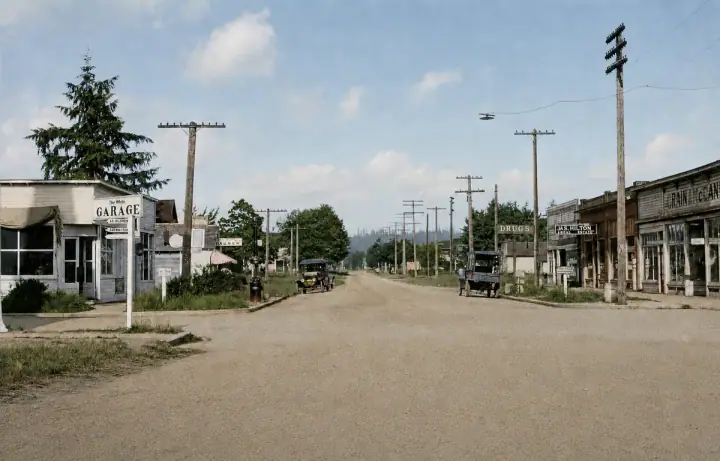
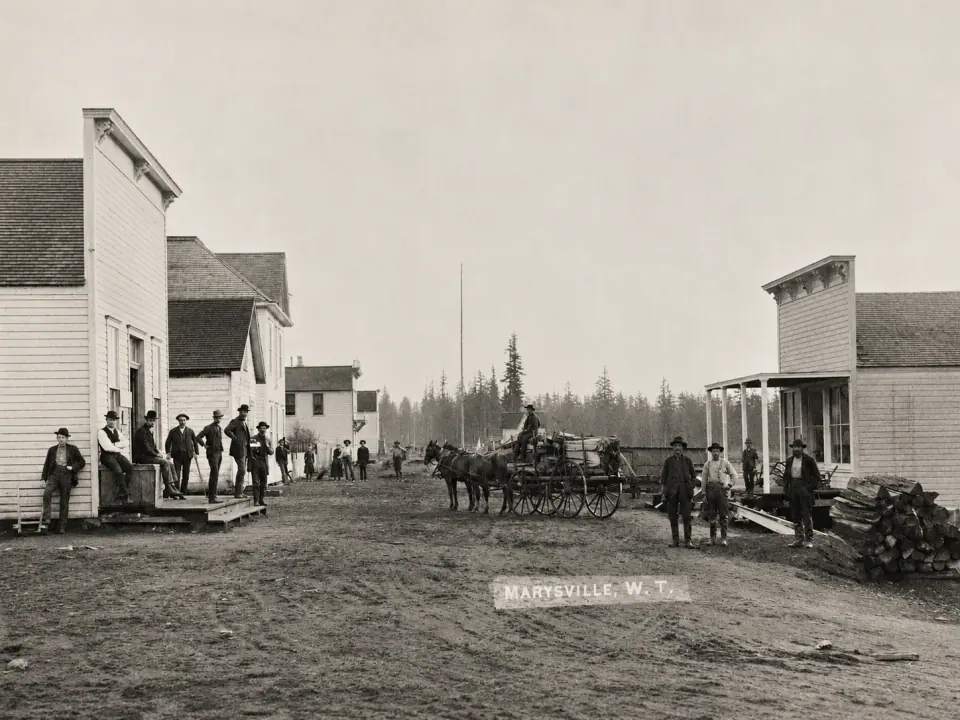
Historic Front Street view at First and Ash in Marysville, Washington Territory, with storefronts, people, and a horse-drawn wagon.
Front Street at 1st and Ash. Marysville Historical Society photo collection.

Historic photograph

Front Street gives the early town a face.

This view of Front Street at 1st and Ash brings the early street grid, wood-frame storefronts, horses, freight, and everyday public life into one readable scene.

Many Marysville threads meet in this street: transportation, business, civic growth, and the gradual shift from muddy routes to a more connected town.

Local timeline

Places, people, and civic landmarks worth remembering

  1. Regional roots

    Coast Salish homelands and Tulalip neighbors

    Marysville's local story belongs in a wider regional context that includes Coast Salish history and the neighboring Tulalip Reservation.

  2. 1870s

    Comeford trading-post era

    James P. and Maria Comeford helped grow a small trading-post community near waterways, logging routes, and early settlement activity.

  3. 1889-1891

    Railroad, mills, and cityhood

    Rail service reached Marysville in 1889, and the city incorporated in 1891 as timber, mills, schools, storefronts, and civic life shaped the growing community.

  4. 1920s

    The Strawberry City

    Berry farming helped give Marysville its "Strawberry City" identity, a tradition still carried forward through the Strawberry Festival.

  5. Civic landmark

    Marysville's water tower

    The water tower is one of Marysville's most recognizable civic landmarks. Peter Condyles' article "Marysville's Water Tower Turns 100" is a strong starting point for that story.

Story snapshots

Quick Marysville facts that invite a deeper look

Town Origins 01

Marysville's Name Has More Than One Story

One account says James Johnson and Thomas Lloyd, carpenters from Marysville, California, suggested the name. Another tradition credits Maria Comeford. The exact answer may never be fully settled.

Early Settlement 02

1,280 Acres for $450

In 1877, J. P. Comeford purchased about 1,280 acres of mostly delta land between Ebey Slough and Steamboat Slough for $450.

Civic History 03

Marysville Incorporated Before Everett

Marysville incorporated on March 17, 1891, making it one of Snohomish County's earliest incorporated towns. Everett incorporated two years later, in 1893.

Early Transportation 04

The First Wagon Arrived in Pieces

In 1884, Marysville's first wagon was brought in pieces and assembled for use on Front Street. At the time, Front Street was only three blocks long and was the only street in town.

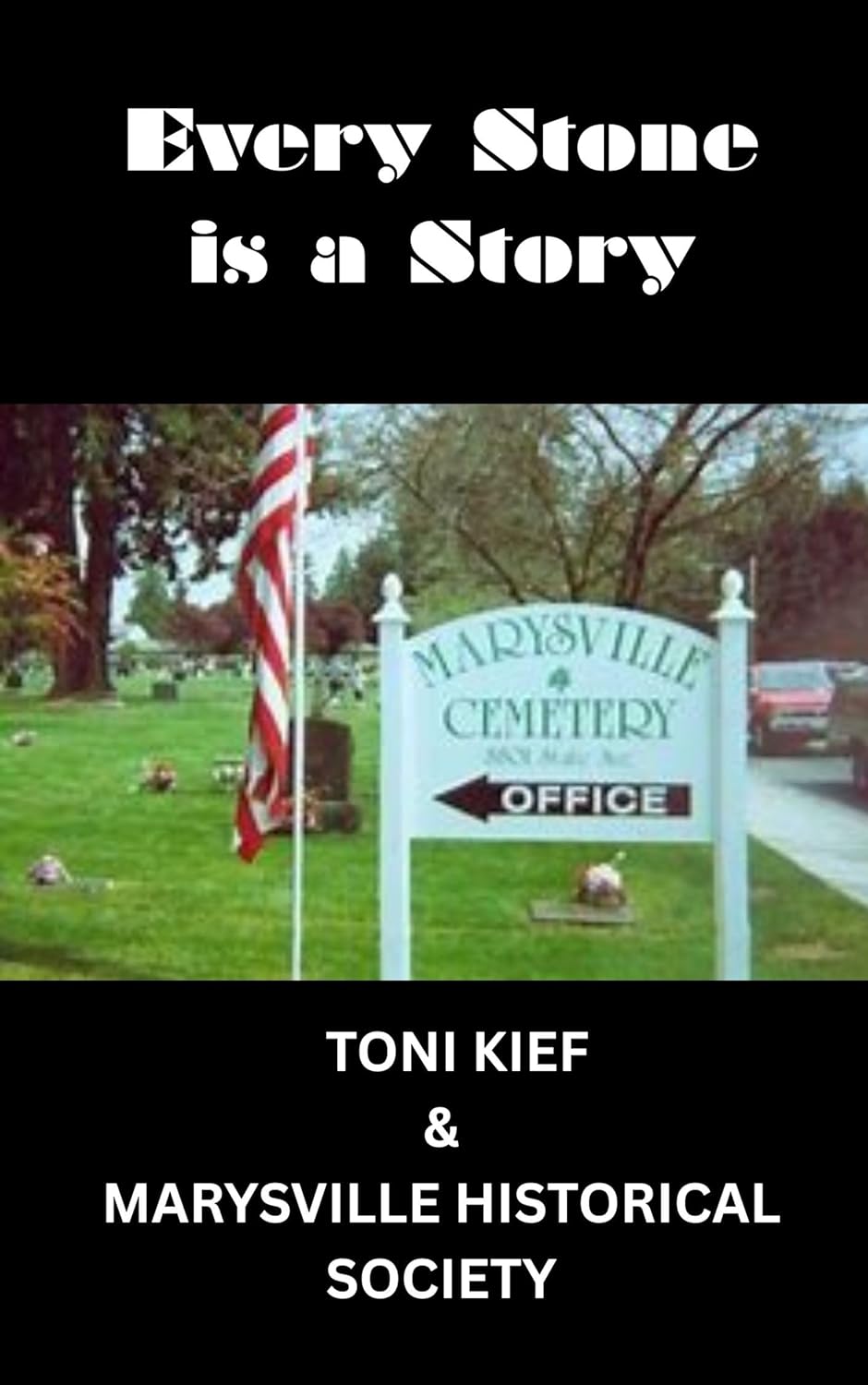
Book cover for Every Stone is a Story by Toni Kief and Marysville Historical Society

Local book spotlight

Every Stone is a Story

Local author and Marysville Historical Society member Toni Kief brings Marysville Cemetery into focus as a place of memory, civic history, and deeply human stories.

Marysville CemeteryLocal AuthorHistorical Society

History keepers

The Marysville Historical Society keeps the local record close.

The Marysville Historical Society is one of the best starting points for anyone who wants to understand Marysville through photographs, documents, objects, museum work, and stories passed from one generation to the next.

For Marysville 250, the society's work helps connect national history themes with the specific places, families, industries, celebrations, and civic moments that make Marysville feel like Marysville.

Local history voice

Peter Condyles

Peter Condyles is president of the Marysville Historical Society and one of Marysville's go-to history guides. He has been involved with the society since 2014 and serves on the Marysville City Council, having been appointed in 2022 and elected by voters in 2023.

Keep exploring local memory

Marysville stories are strongest when they stay connected to sources.

Use the story cards, cemetery feature, People page, Historical Society resources, and local-author articles as starting points for a deeper look at Marysville's people, places, records, and civic landmarks.